When Your Rabbit Stops Eating
Author: Larissa Church
When a bunny isn’t eager for food or their favorite treat, it’s a universal signal to their guardians that something is wrong. It’s enough to make even a seasoned rabbit guardian’s stomach drop!
Loss of appetite is most commonly a sign of gastrointestinal stasis, a condition that can become life-threatening if left untreated. It occurs when the digestive system slows down or stops moving properly, often due to an underlying condition like gas, dental issues, or an intestinal obstruction. A rabbit’s digestive system is designed to move constantly, so if your bunny hasn’t eaten or pooped in 12 hours, it’s considered an emergency and it’s time to get them to a rabbit-savvy veterinarian!
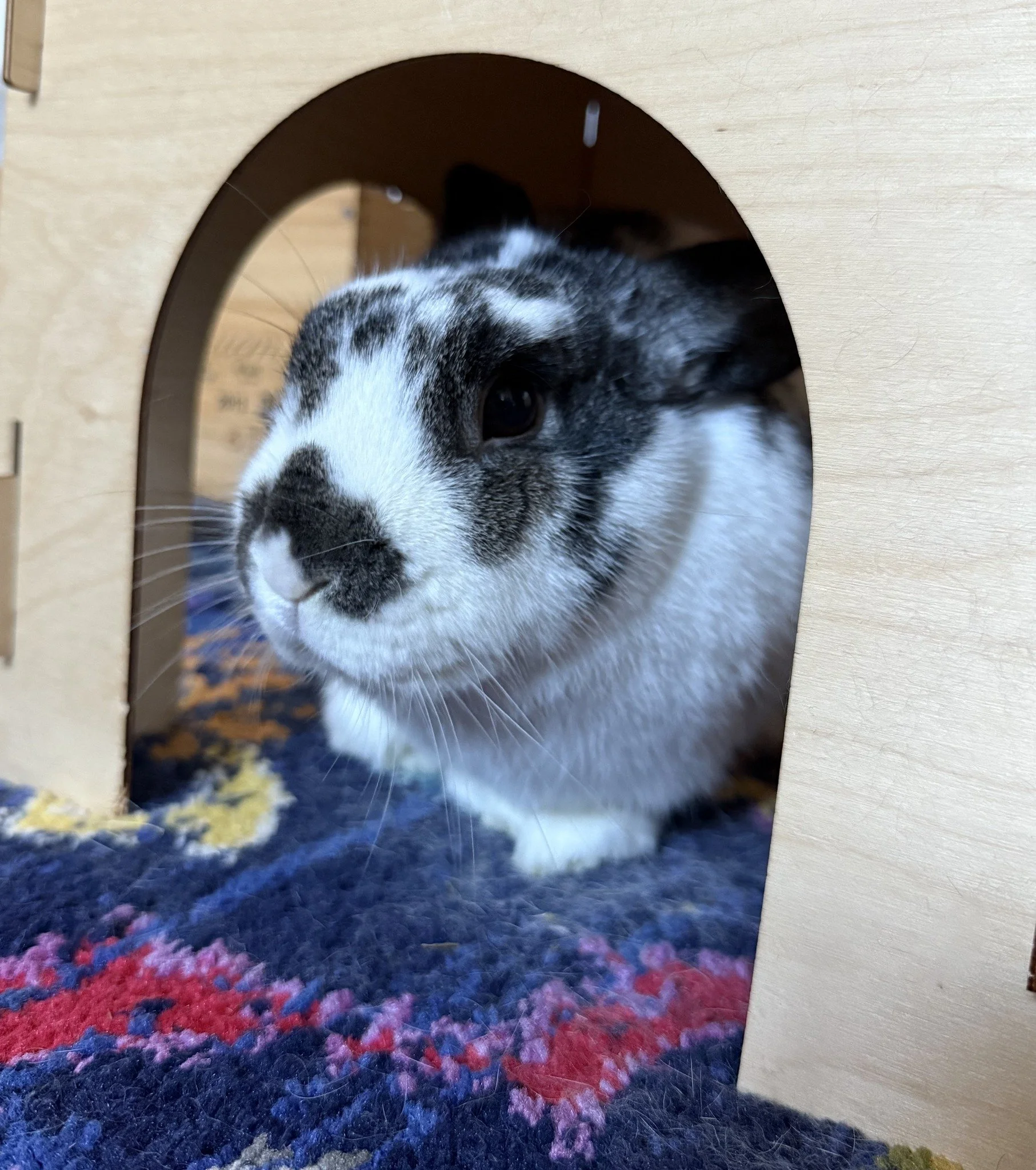
Rabbit GI stasis is something I’ve unfortunately gotten a lot of experience dealing with, particularly with one of my rabbits, Fortune Cookie. Like so many rabbits, he was found on a busy street after being dumped outside, surviving on his own for months before being caught and transferred to HRS. Fortune Cookie has ongoing digestive issues, suspected to be a result of malnutrition from his time on the street. He’s also a spotted rabbit, a type of rabbit predisposed to a medical condition called megacolon, a genetically-inherited disorder that causes the nerve endings in a rabbit’s intestinal tract not to function properly. Through the years I’ve learned to be as prepared as possible for emergencies.
Get Prepared
Every bunny’s needs and medical history is different, so the most proactive thing you can do for yours is to make an emergency plan with your rabbit-savvy veterinarian before an emergency strikes. And with rabbits, it’s a matter of when, not if.
Your vet can help you decide what’s appropriate to keep at home, and may be willing to prescribe a small amount of emergency medication, such as meloxicam for pain management, to have on hand. Ask whether they would also recommend keeping Lactated Ringer's Solution (LRS) fluids at home as well, which are administered subcutaneously and also require a prescription. I’m fortunate that my veterinarian has prescribed both for Fortune Cookie, since he experiences GI upset flare-ups fairly regularly and typically improves after I administer them.
Bookmark several veterinary options in your area ahead of time, including emergency clinics that see rabbits if possible. If you’re located here in the San Francisco Bay Area, you can use our list of rabbit-savvy veterinarians, which includes several emergency clinics. Inevitably, when your rabbit gets sick, it will be on a weekend, when fewer rabbit-savvy veterinarians are available, or in the middle of the night when your options are limited, but having a prepared list can save precious time during an emergency.
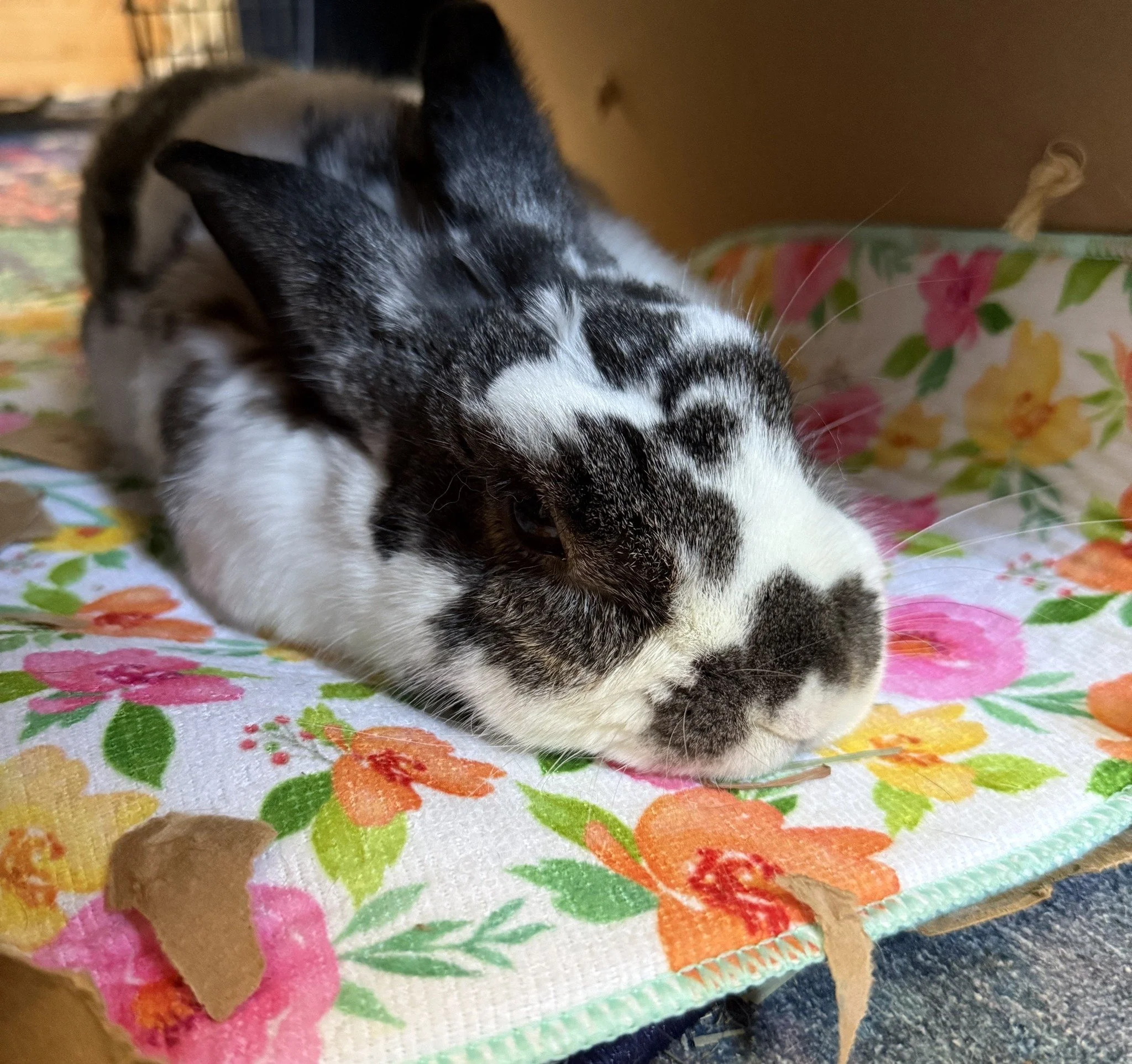
With staffing shortages and the ongoing difficulty many rabbit guardians face finding rabbit-savvy emergency care, there may be times when you have to stabilize your rabbit while waiting to be seen.
That said, home treatment is never a substitute for having your rabbit examined by a rabbit-savvy veterinary professional in an emergency situation, and additional treatment like x-rays, bloodwork, ultrasounds, and medications are only administered in a clinic setting. It’s important to remember that an emergency kit’s purpose is to help you keep your rabbit stable until a vet can see them.
So what should go in your emergency kit? You can read our in-depth article “Prepare an Emergency Kit” for a full list of suggested items, but at a minimum, I recommend a thermometer, water-based lubricant, and a heating disc such as a Snuggle Safe.
At HRS, we use a Bair Hugger warming system to help rabbits maintain their body temperature after surgery, but for those of us who don’t have access to medical-grade equipment, something like this portable blanket warmer can do the trick. In a pinch, I’ve also put Fortune Cookie in a carrier with two Snuggle Safe discs and covered the carrier with a blanket to trap the warmth in. Many experienced rabbit people keep infant gas drops (simethicone) on hand, and while there’s limited evidence that it helps, it’s generally considered safe, and anecdotally some people feel it helps their rabbit when they have gas. I give it to Fortune Cookie just to cover all my bases.
I’ve also personally found the Well Kept Rabbit’s Hop n’ Flop Bed to be essential to use when administering medication to Fortune Cookie, since it keeps him comfortably contained in one area. It’s also very useful to put your rabbit in when you need to give them a belly massage! Your veterinarian will likely suggest keeping Oxbow’s Critical Care supplement food on hand as well, though it’s important to only syringe-feed it after a life-threatening blockage has been ruled out.
Keep Track
It can be hard to think clearly and keep track of everything when you’re stressed, which is why I strongly recommend keeping a log of everything the moment you notice your rabbit isn’t feeling well. Write down their temperature, ideally checking it every 30 to 60 minutes depending on what it is, along with any medications or supportive care you’ve administered according to your veterinarian’s instructions. A rabbit's normal temperature is 101-103°F—anything lower or higher is an emergency and your rabbit needs to be warmed up/cooled down and taken to an emergency clinic ASAP.
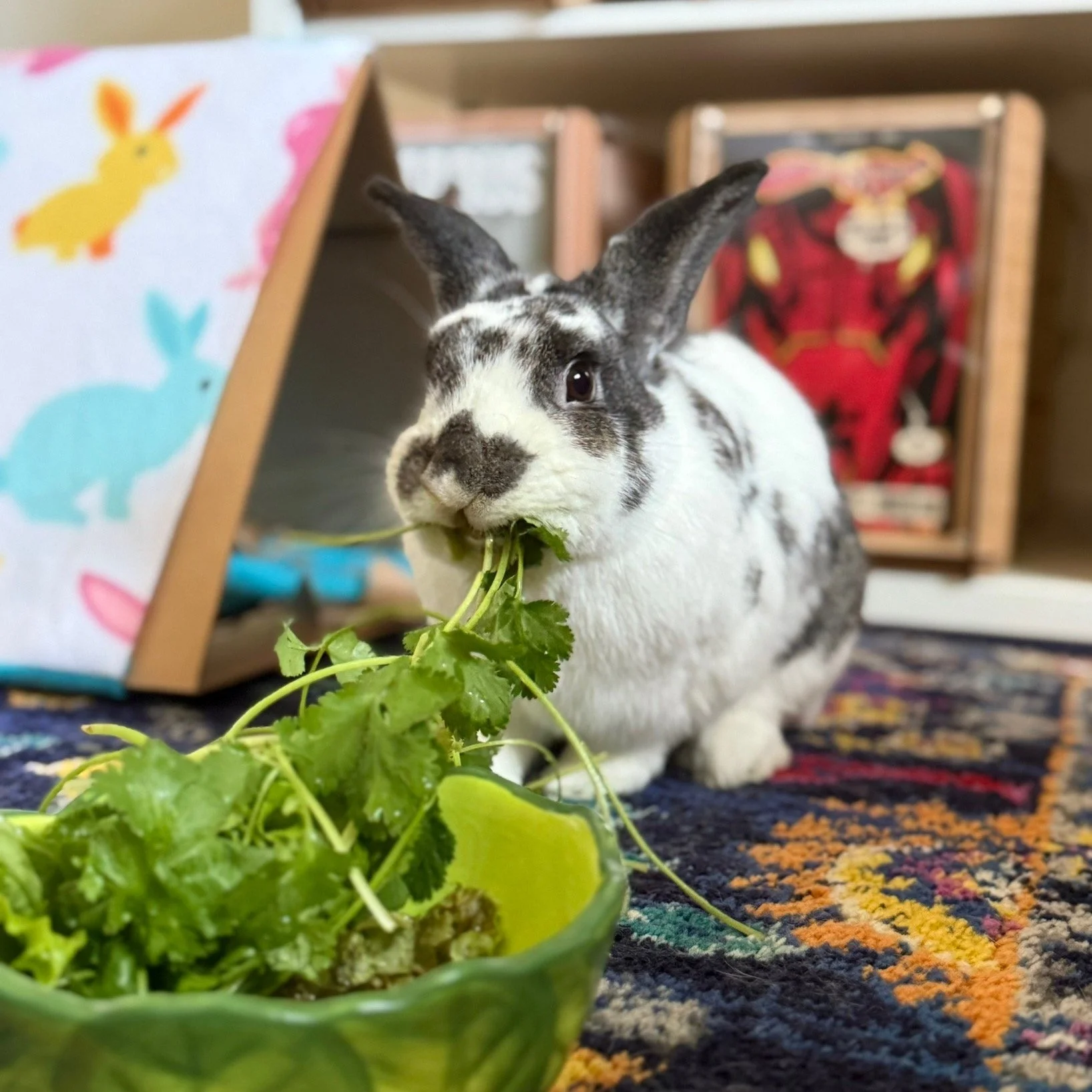
It can also be very helpful to track your rabbit’s poop (or lack thereof). I’ll take inventory of what Fortune Cookie’s litter box looks like at the beginning of a possible stasis episode and continue monitoring it throughout. In my log, I track how often he poops, approximately how much he poops, and the size and quality of those poops. (Take a look at our “Rabbit Droppings as Health Indicators” handout for more information about rabbit poop.) This information is very helpful for the times I’ve ended up taking Fortune Cookie into an emergency clinic, especially if he’s seeing a veterinarian we’ve never seen before who isn’t familiar with his medical history.
Encouraging Signs
When Fortune Cookie is recovering, or when I’m trying to determine whether he’s starting to feel better, I try to provide him with a variety of items to encourage him to nibble something—but nothing with too much sugar, since we don’t want to upset that tummy anymore than it already has been. Some of his tried-and-true favorites include willow baskets, rose petals, apple sticks, various forage mixes, and seagrass mats. (All of which HRS sells through the Hop Shop, shipping nationwide!)
It’s important to stay as calm and patient as possible during an emergency. Rabbits are incredibly sensitive animals, and having a plan in place ahead of time can make these situations feel far less overwhelming for you both. Work closely with your veterinarian, build an emergency kit before you need one, and get comfortable taking your rabbit’s temperature and administering medications safely. Those skills can make a huge difference when every minute counts.